
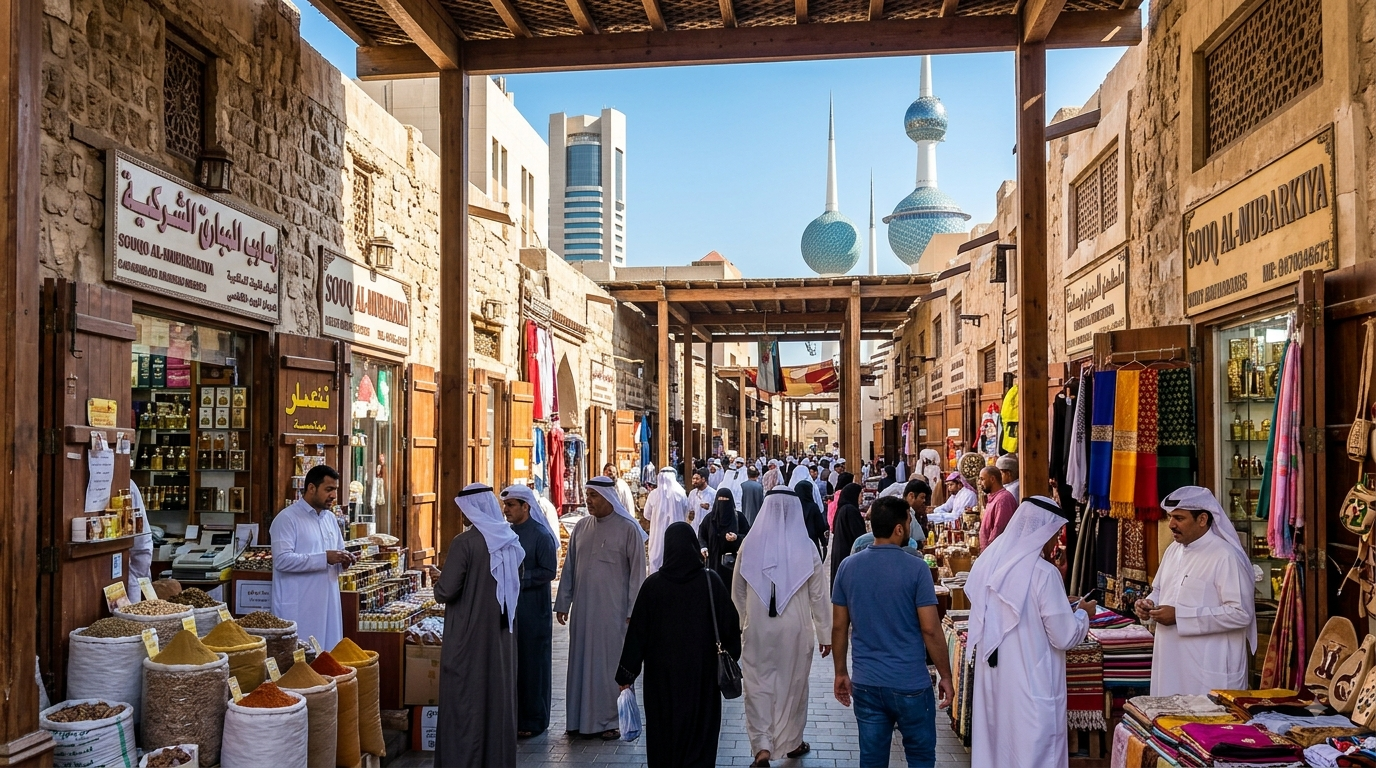
One of Kuwait's oldest trading districts is open to visitors again, but part of it is still tied to a rebuild that began after a major fire.
KUWAIT CITY, October 2026 – Souq Al-Mubarakiya, a traditional market in the old centre of Kuwait City, is free to enter and open daily, though shop hours vary and part of the district has been under reconstruction since a fire on 31 March 2022. Sources disagree on how old the market is, and on whether the rebuild is finished.
The market matters now because it is one of the few places where Kuwait's pre-oil trading life survives in the middle of the modern city. The 2022 fire destroyed at least 25 shops and exposed older building layers, which turned a shopping story into a heritage debate. This report sets out what is confirmed, what is only reported and what remains unclear.
Souq Al-Mubarakiya Key Facts
| Item | Detail | Status |
|---|---|---|
| Location | Kuwait City, between Abdullah Al-Mubarak, Abdullah Al-Salem and Palestine streets | Confirmed |
| Age | Sources say anything from about 120 to more than 200 years | Sources differ |
| Named after | Sheikh Mubarak Al-Sabah, who ruled Kuwait from 1896 to 1915 | Reported |
| Entry | Free to walk in; the two small museums are also reported as free | Reported, as of October 2026 |
| Opening hours | Often quoted as about 8:00 or 10:00 to 22:00; each shop sets its own | Reported |
| Season | Open year-round | Reported |
| Typical visit | A few hours, including a meal or tea | Reported |
| Heritage status | A large part of the area is said to be on Kuwait's national heritage register at the top rating | Reported |
| Main costs | No entry fee; purchases and food vary by stall | Reported |
How Souq Al-Mubarakiya Developed
The market grew as a trading centre before oil was discovered. A statement from the contractor now rebuilding part of it describes it as once the heart of trade with neighbouring countries, Africa and India.
Its name comes from Sheikh Mubarak Al-Sabah, the seventh ruler of Kuwait. Reports say he built a small kiosk in the area, which is preserved today as a museum.
| Period | What happened |
|---|---|
| Late 19th to early 20th century | The market takes shape around the reign of Sheikh Mubarak (1896 to 1915). Some sources date it earlier, to the 18th century. |
| Before oil | A main place to buy and sell goods such as dates, spices, clothing and jewellery. |
| 1950s | Kiosks of Souq Al-Hareem, the women's market, are built under the patronage of Sheikha Mudhi Al-Mubarak Al-Sabah. |
| 1990 to 1991 | The market is damaged during the Iraqi invasion and occupation, then renovated. |
| March 2011 | The renovated Sheikh Mubarak Kiosk reopens, according to a local blog. |
| 2012 | Souq Al-Hareem is restored under the Kuwait Voluntary Work Centre, reports say. |
| 31 March 2022 | A major fire destroys at least 25 shops, hitting the arms market hardest. |
| 2022 to 2023 | A consultative team is formed. Historic columns found during works draw the attention of the culture council. |
| March 2024 | Kuwait Finance House signs a contract with Alghanim International to rebuild about 17 buildings. |
| November 2024 | A press report says restoration is nearing completion. |
| September 2025 | The Kuwait Fire Force inspects the reconstruction site for safety. |
What Is at Souq Al-Mubarakiya Today
Sheikh Mubarak Kiosk
This small museum preserves the kiosk where Sheikh Mubarak is said to have received people and heard their requests. A local blog says the renovated building reopened on 23 March 2011. Entry is reported to be free.
Kuwait's first pharmacy
The second small museum is described as the first pharmacy in Kuwait. It is reported to be free to visit. Opening times are not clearly published, so ask nearby shopkeepers or check on arrival.
Souq Al-Hareem
The women's market is a narrow lane of kiosks beside the main souq. A Kuwait Times report says it has 68 kiosks and that its rules limit vendors to Kuwaiti women owners. It sells traditional dresses, prayer garments, kohl, pumice stones and similar goods. The same report noted that it had become quiet, but a 2025 cultural event brought attention back to it.
Gold, carpet and perfume lanes
Reports describe a gold market, a Persian carpet market and shops selling oud, musk and incense. Currency exchange shops and abaya shops are reported on the back streets. Prices are not fixed, so compare before you buy.
Food and produce stalls
Travellers report fresh meat, fish, dates, honey, spices, sweets, fruit and vegetables. One regular customer says they have bought meat here for more than six years. Quality varies by stall.
Courtyard cafes near the Sea Mosque
A courtyard near Masjid Al-Bahar has traditional cafes that brew tea over coals. Several small restaurants nearby serve Arab and Persian food in the open air.
The arms market and the fire-hit section
The 2022 fire hit the arms market, sometimes called the Al-Gharballi area, which was known for old daggers and swords. Heritage officials said the fire exposed older mud-brick layers and suggested keeping some traces visible. What has been kept in the rebuilt section is not confirmed.
Getting to Souq Al-Mubarakiya and What It Costs to Enter
There is no ticket office. You walk in, and each shop, cafe or museum sets its own terms.
Location and access
- Between Abdullah Al-Mubarak, Abdullah Al-Salem and Palestine streets
- Near the Sea Mosque, per a courtyard description
- A 2015 blog places it near the Grand Mosque and the stock exchange
- Parking: a municipal plan mentions parking lots and a park, but current arrangements are not confirmed
Entry and hours
- No entry fee reported for the market or the two small museums
- Many sources say daily, roughly 8:00 or 10:00 to 22:00
- Some shops reportedly close for a midday break
- No central visitor contact point was found
A Worked Example of a Visit to Souq Al-Mubarakiya
An illustrative plan for Sunday 8 November 2026. Sunday is a normal working day in Kuwait. All times are examples only.
- Arrive in the late afternoon and walk the main lanes first, before the busiest evening period.
- Visit the Sheikh Mubarak Kiosk and the pharmacy museum while they are open.
- Walk through Souq Al-Hareem, then the perfume and fabric lanes.
- Stop for tea in the courtyard near the Sea Mosque.
- Eat at an open-air restaurant, and note which shops you want to revisit.
Reported Costs at Souq Al-Mubarakiya
| Item | Reported cost | Note |
|---|---|---|
| Walking into the market | Free | No ticket reported |
| Sheikh Mubarak Kiosk and pharmacy museum | Free | Older travel listing; confirm on site |
| Shopping | Not fixed | Bargaining is reported; prices differ by stall |
| Tea, snacks and meals | Not published | Varies by cafe or restaurant |
| Parking | Not confirmed | Check nearby signs |
These are reported figures as of October 2026 and can change without notice.
Rules, Safety and Respect in the Market
- Construction zones. Reconstruction was still being monitored in September 2025. Follow barriers and signs near any fenced areas.
- Heritage remains. Do not touch or climb on exposed walls or columns found during the works.
- The mosque. Dress and behave respectfully around the Sea Mosque and keep noise down near it.
- Photos. Ask vendors, and especially the women who run the kiosks, before photographing them or their goods.
- Antiques and weapons. I could not verify rules on taking old daggers, swords or antiques out of Kuwait. Ask the seller and check customs rules before you buy.
- Heat and crowds. Summer afternoons are hot, and evenings and weekends can be crowded.
Entry and Travel Notes
Souq Al-Mubarakiya is in Kuwait City, so you need valid permission to enter Kuwait first. Check the list of eligible countries, prepare the required visa documents and review the current visa fees.
When you are ready, you can start your application or use the status checker for one already submitted. The official portal for Kuwait's visa is run by the Ministry of Interior. This site is a private information and assistance service, and its fees are separate from government charges.
What We Know and What Is Still Unclear
- Known: a major fire on 31 March 2022 destroyed at least 25 shops.
- Known: a reconstruction contract was signed in March 2024.
- Unclear: whether the rebuild is fully complete as of October 2026.
- Unclear: the budget, since reports give both KD 6 million and KD 8 million.
- Unclear: the market's true age, and its exact current opening hours.
- Unclear: how many fire-affected shops have reopened, and which traces were preserved.
Voices and Sources
This report draws on Kuwaiti press coverage, including reports carried by the national news agency, and on statements from the culture council, Kuwait Finance House and the contractor. It also uses encyclopedia entries and traveller reviews for practical details. No interviews were conducted, and no quotes are attributed to individuals. Where sources conflict, the conflict is stated in the text.
Frequently Asked Questions
Final Thoughts
Souq Al-Mubarakiya rewards visitors who like walking through a working market and learning how Kuwait City traded before oil. It is free to enter, but hours, prices and the state of the rebuilt section are not fixed. Confirm details on the day, and check your entry permission for Kuwait before you travel.
Leave a Comment
Share your questions, feedback, or experience regarding the news.
No Comments Yet
Be the first to share your experience or ask a question.